Torna alla scenaBack to the scene HOME PAGE DI LIRUX · HELP

Come si guarda

How to watch

Sembra una cartolina

It looks like a postcard

Non lo è. Il Sole e la Luna passano davvero là sopra, e la montagna sotto ha le sue ore: qualcosa si fa vedere solo all’alba, qualcos’altro passa una volta sola. Qui trovi dove guardare, non cosa troverai.

It is not. The Sun and the Moon really do pass up there, and the mountain below keeps its own hours: some things show up only at dawn, others pass by just once. This page tells you where to look, not what you will find.

01 · SCENA

Un giorno intero, in quattro momenti

A full day, in four moments

Nessuna scena si ripete: luce, colori, nuvole e cielo dipendono da dove sei e da che ora è.

No two moments look alike: light, colours, clouds and sky depend on where you are and what time it is.

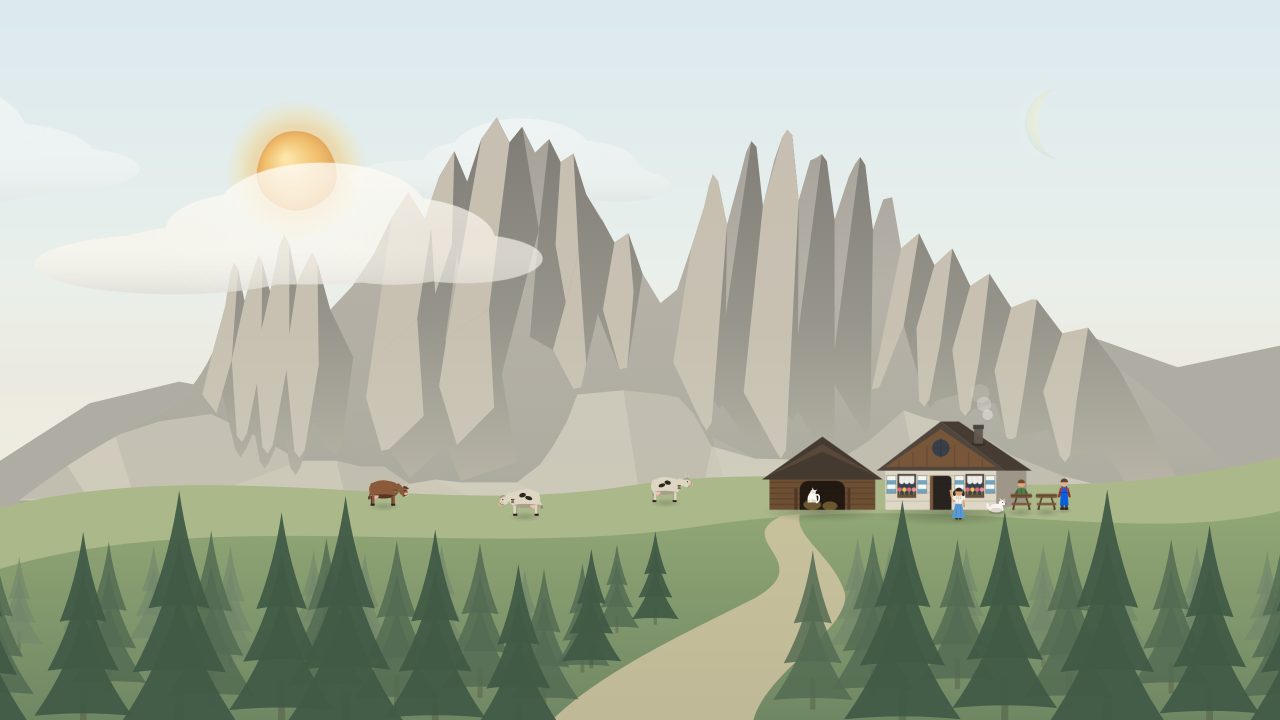
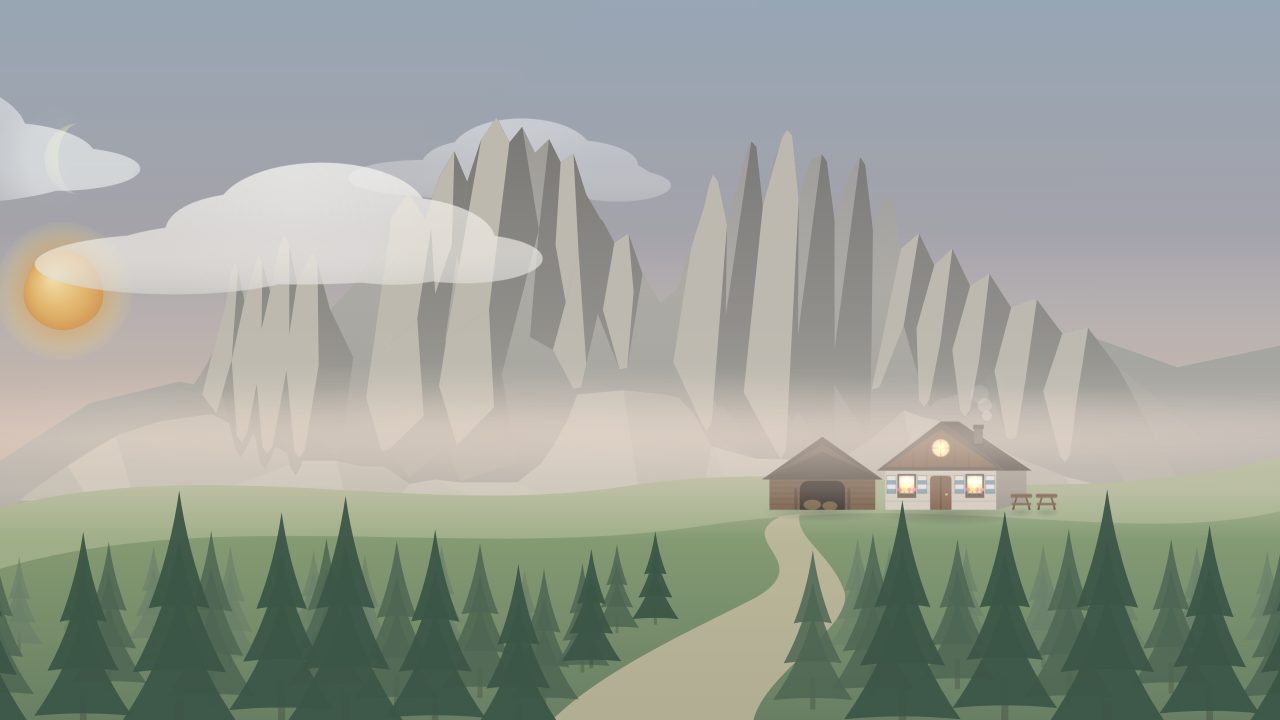
Il paesaggio montano all’alba
AlbaDawnLa prima luce scavalca il crinale e la valle si sveglia un pezzo alla volta.The first light clears the ridge and the valley wakes one piece at a time.
Il paesaggio montano durante il giorno
GiornoDayOmbre corte e aria chiara. Le stelle ci sono ancora, semplicemente nessuno le vede.Short shadows and clear air. The stars are still up there; nobody can see them, that is all.
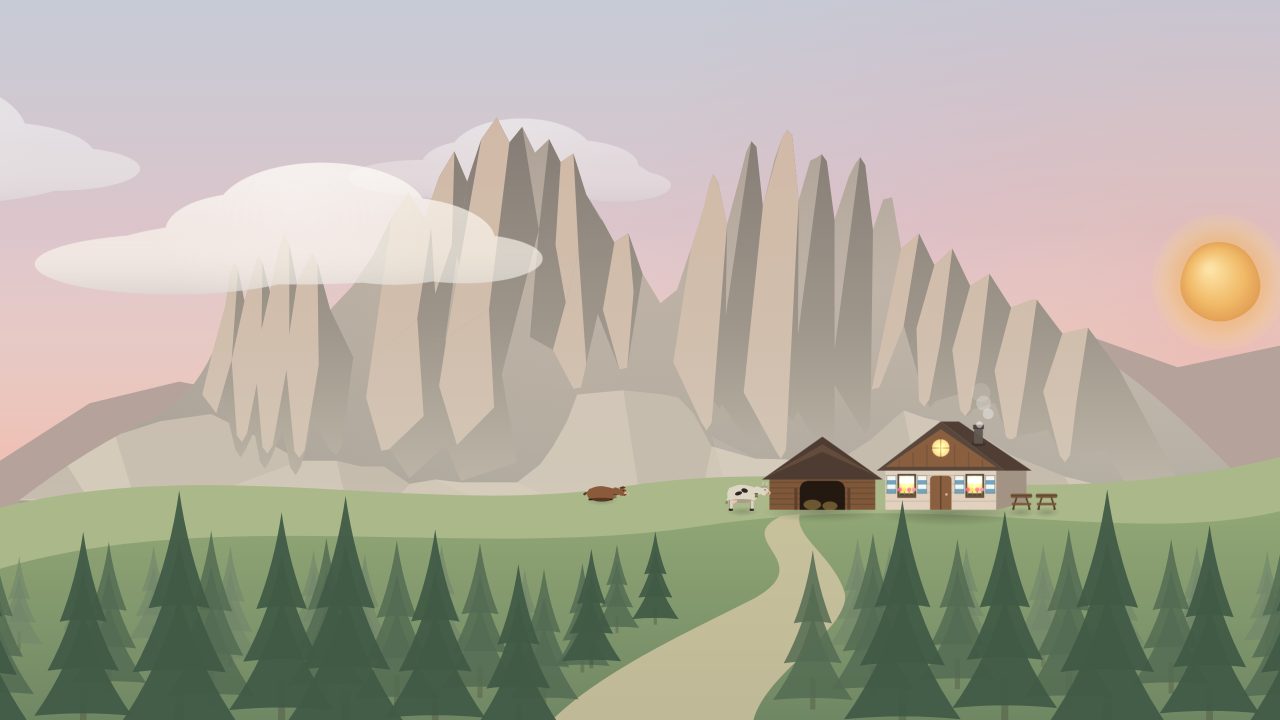
Il paesaggio montano al tramonto
TramontoSunsetLa luce si scalda e qualcosa comincia ad accendersi lassù.The light turns warm and something begins to switch on up there.
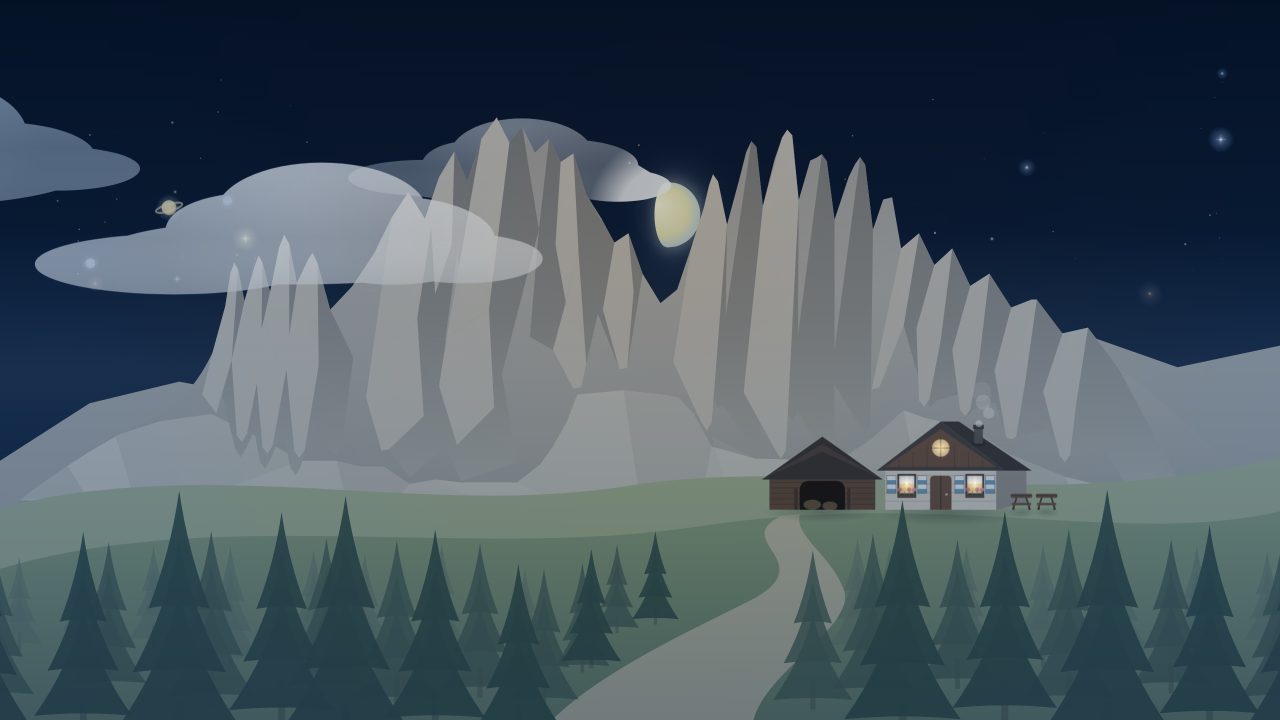
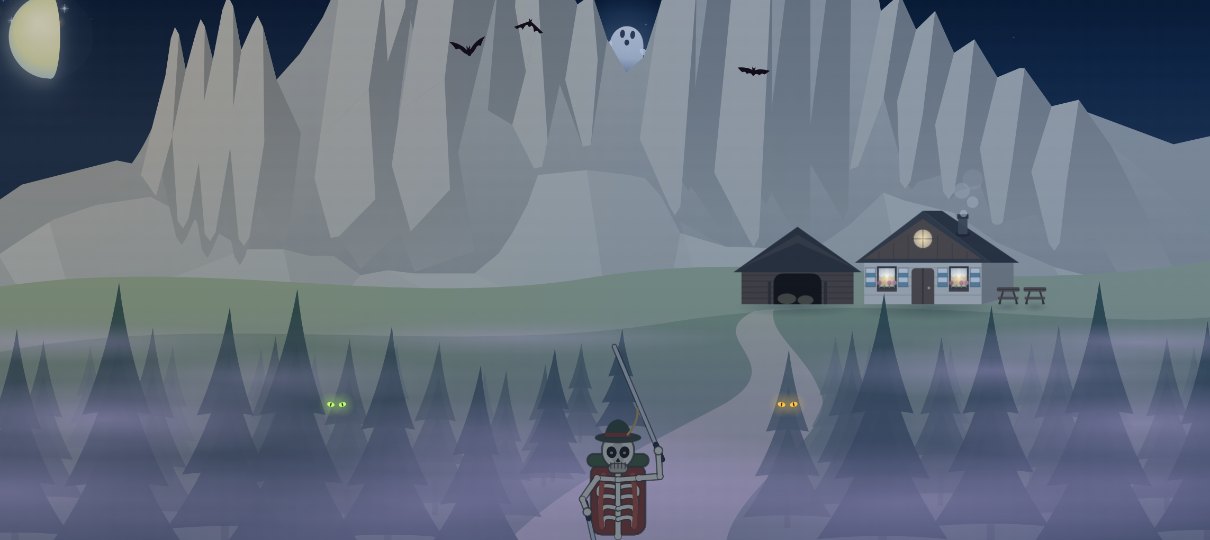
Il paesaggio montano di notte
NotteNightIl buio restituisce il cielo, e non solo stelle: qualcosa, lassù, è di passaggio.Darkness gives the sky back, and not only stars: something up there is only passing through.
02 · CONTROLLI

Muoviti nel tempo e nello spazio

Move through time and space

La barra in basso governa la simulazione. Su computer fermati su un tasto per leggerne il nome; su touch i pulsanti sono dimensionati per il tocco.

The bottom toolbar controls the simulation. On desktop, hover over a button to read its name; touch targets are sized for mobile.

Barra dei controlli della simulazione

Tasti di controllo

Control buttons

  • Indietro veloceFast rewindFa scorrere indietro la simulazione.Runs the simulation backwards.
  • Pausa / RiprendiPause / ResumeFerma il cielo oppure riparte a velocità reale.Stops the sky or resumes at real-time speed.
  • Avanti veloceFast forwardAccelera il tempo per osservare l’evoluzione della scena.Speeds up time to reveal how the scene evolves.
  • AdessoNowTorna a data, ora e velocità reali.Returns to the real date, time and speed.
  • Quando e doveWhen and whereApre data, ora e posizione dell’osservatore.Opens the observer’s date, time and position.
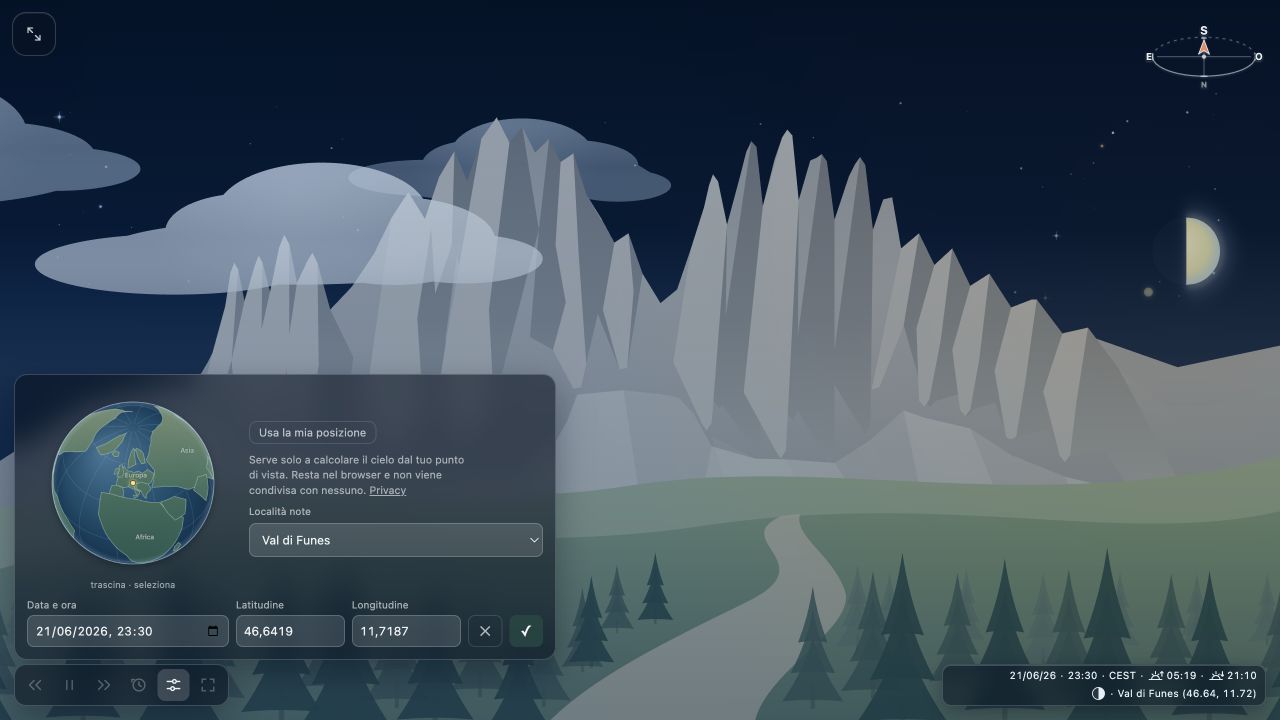
Pannello per scegliere luogo, data e ora

Dialog posizione e data

Location and date dialog

Trascina il mappamondo e seleziona un punto, scegli una località nota oppure inserisci latitudine e longitudine. Imposta data e ora, poi conferma con ✓. La posizione resta nel browser e serve solo a calcolare il cielo.

Drag the globe and select a point, choose a known location, or enter latitude and longitude. Set date and time, then confirm with ✓. Your position stays in the browser and is only used to calculate the sky.

03 · CIELO

Leggi il momento a colpo d’occhio

Read the moment at a glance

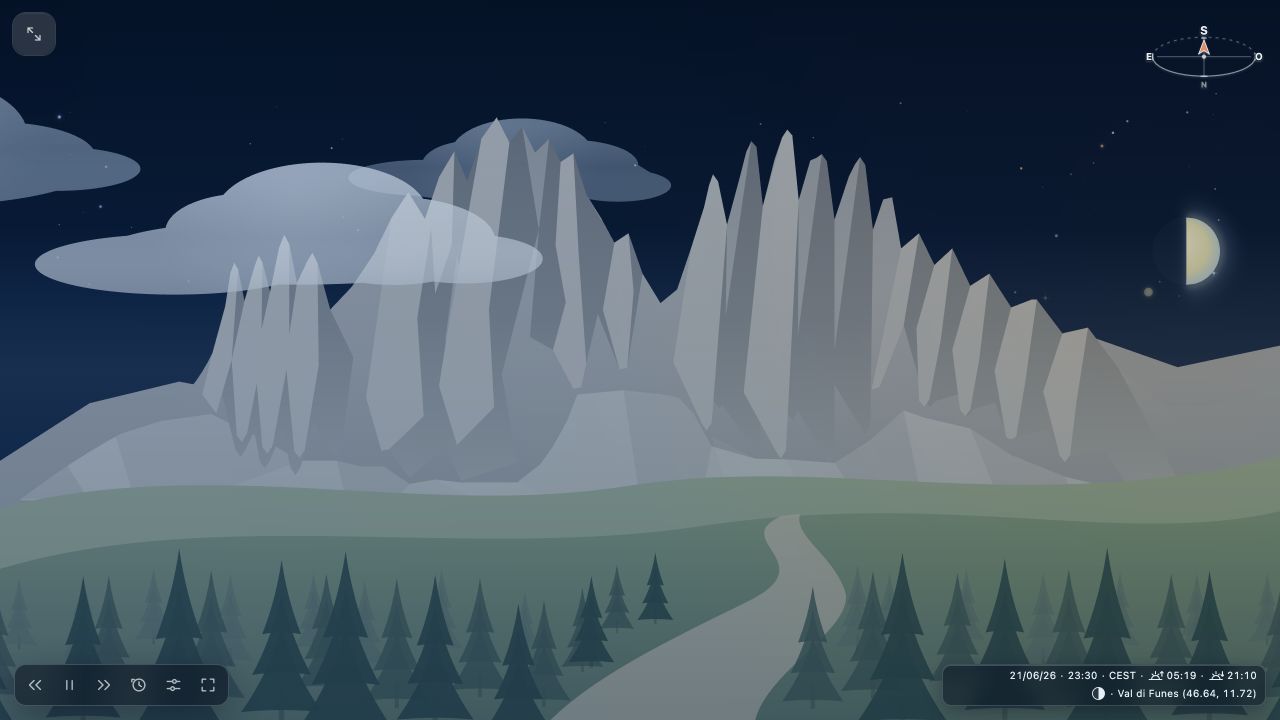
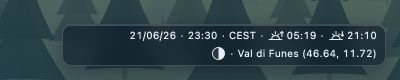
Il pannello in basso a destra riassume le condizioni astronomiche per il luogo scelto.

The panel at bottom right summarises astronomical conditions for the selected location.

Pannello di riepilogo con data, ora, alba, tramonto, fase lunare e coordinate
  1. Data e oraDate and time Il momento simulato. The simulated moment.
  2. Fuso orarioTime zone Calcolato dalla posizione, non dal dispositivo. Calculated from the location, not the device.
  3. Alba e tramontoSunrise and sunset Gli orari locali dei due eventi solari. Local times for both solar events.
  4. Fase lunareMoon phase L’icona mostra la porzione illuminata della Luna. The icon shows the illuminated portion of the Moon.
  5. CoordinateCoordinates Latitudine e longitudine del punto di osservazione. Latitude and longitude of the observation point.
04 · AMBIENTE

Cielo e paesaggio

Sky and landscape

Parecchie cose, in cielo e sul rilievo, hanno qualcosa da raccontare a chi si ferma a guardarle.

Plenty of things, in the sky and on the ridge, have something to tell whoever stops to look.

Come usarli. Vale per Ambiente, Uomini e Animali. Muovi il puntatore vicino a un oggetto: il cursore a mirino segnala che è interattivo. Passaci sopra per aprire la scheda. Su touch, tocca una volta per fissarla e di nuovo per chiuderla.

How to use them. This holds for Environment, People and Animals alike. Move the pointer near an object: the crosshair cursor signals that it is interactive. Hover over it to open its card. On touch, tap once to pin it and again to close it.

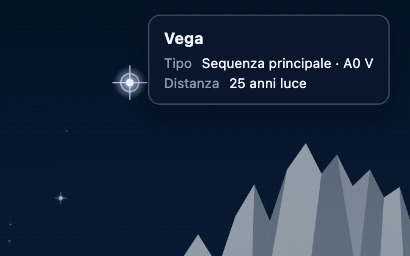
Tooltip informativo di una stella

StelleStars01

Non sono puntini messi a caso. Le più luminose hanno un nome, un colore e una distanza che non ti aspetti: chiedilo a loro.

They are not dots scattered at random. The brightest ones carry a name, a colour and a distance you would not guess: ask them yourself.

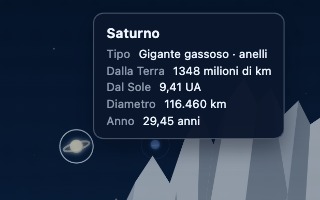
Tooltip informativo di un pianeta

PianetiPlanets02

Qualcuno, tra le stelle, non scintilla. Trovalo e lasciati dire quanto è lontano il suo mondo, e quanto dura lassù un anno.

Something among the stars refuses to twinkle. Find it, and let it tell you how far its world is, and how long a year lasts up there.

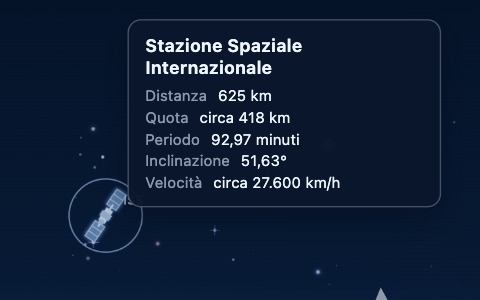
Tooltip informativo della Stazione Spaziale Internazionale

ISS03

Ogni tanto un punto attraversa il cielo troppo in fretta per essere una stella. Non torna indietro ad aspettarti: prendilo al volo, se ci riesci.

Now and then a dot crosses the sky far too quickly to be a star. It will not come back to wait for you: catch it as it goes, if you can.

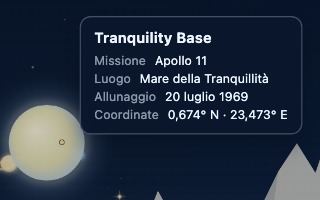
Tooltip del sito di allunaggio Apollo 11

AllunaggioMoon landing04

Guarda la Luna quando si fa grande: sul disco c’è un segno minuscolo, nel punto esatto in cui qualcuno, una volta, è sceso.

Watch the Moon when it grows large: there is a tiny mark on the disc, at the exact spot where someone, once, stepped down.

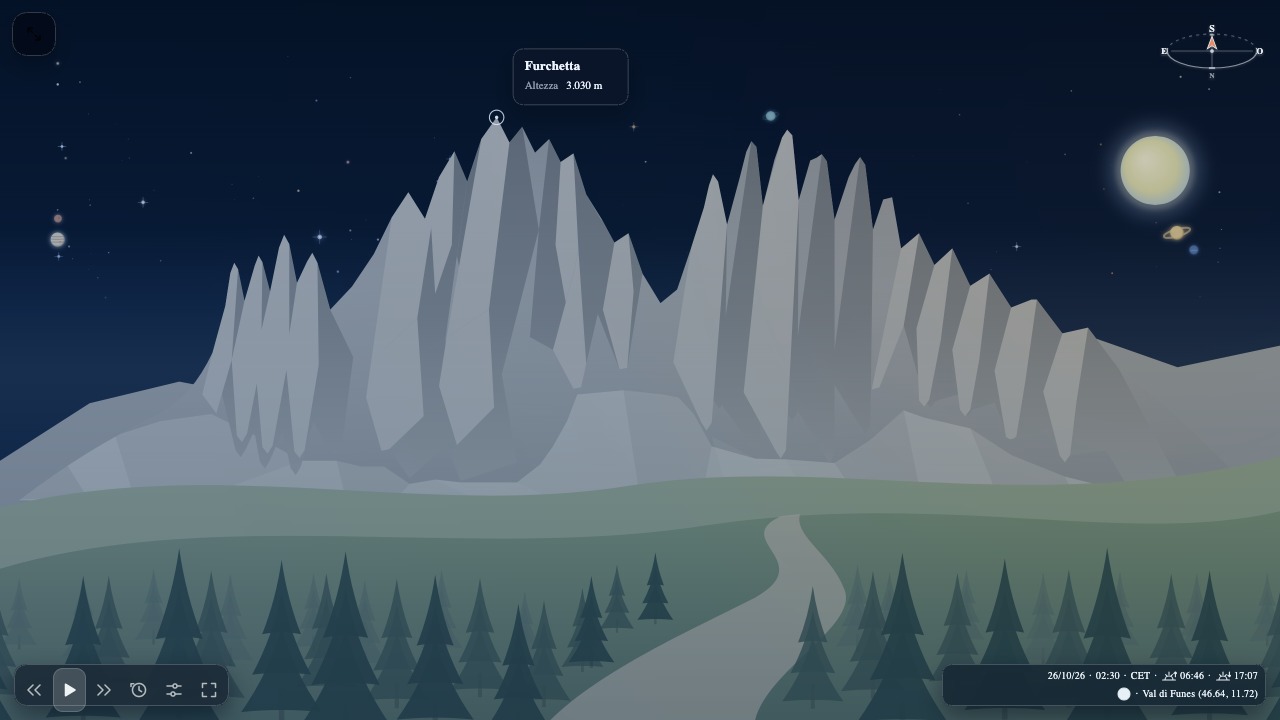
Tooltip informativo di una cima montuosa

CimePeaks05

Le guglie delle Odle non sono tutte uguali e ognuna si porta dietro il proprio nome. Segui il profilo e scopri quale hai davanti, e quanto è alta.

The spires of the Odle are not interchangeable, and each one carries its own name. Follow the skyline and find out which one you are facing, and how high it stands.

Vento tra gli abetiWind through the firs06

Il bosco non sta mai fermo del tutto. Passa tra le chiome, con il puntatore o con il dito, e qualcosa si mette in moto tra i rami: non aspettarti che si calmi subito.

The forest is never completely still. Sweep through the crowns, with the pointer or a fingertip, and something sets off among the branches: do not expect it to settle straight away.

05 · UOMINI

Chi vive e passa per la montagna

Who lives and travels on the mountain

Quassù qualcuno lavora, qualcuno passa e basta. Guarda abbastanza a lungo e capirai chi fa cosa.

Up here some people work and some are only passing by. Watch long enough and you will work out who does what.

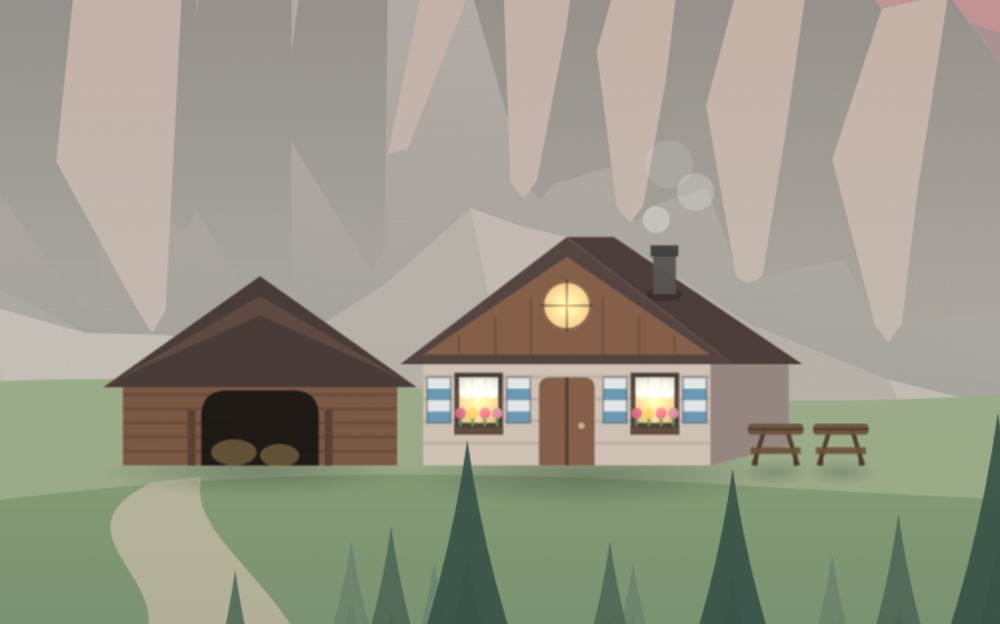
La malga in radura al crepuscolo, con le finestre illuminate e il fumo dal camino

Malga CasnagoMalga Casnago01

Una malga in radura sopra il sentiero, con la stalla, le panche e qualche bestia intorno. Vive con le ore: le imposte si aprono, il fumo sale, e quando cala la luce qualcosa si accende dietro i vetri. Avvicinati piano: la casa non è l’unica, là davanti, ad avere un nome.

A hut in a clearing above the trail, with its stable, its benches and a few animals about. It lives by the hours: the shutters open, smoke climbs, and as the light drops something comes on behind the glass. Come closer, slowly: the house is not the only one out there with a name.

L’elicottero rosso del Soccorso Alpino sopra le Odle
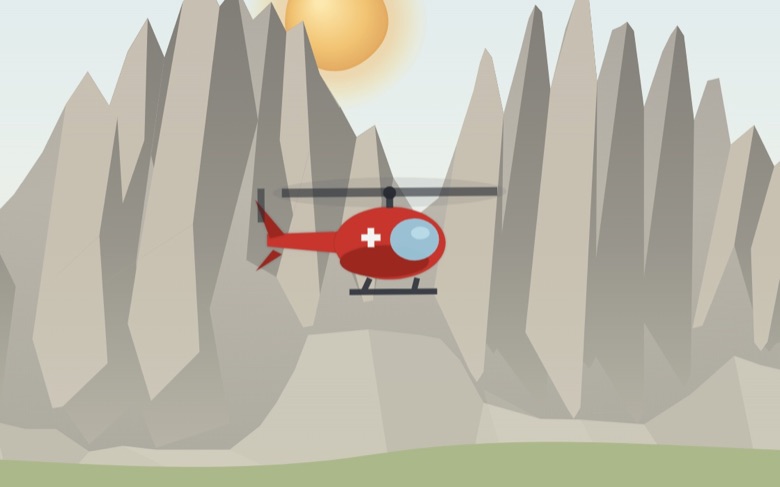
Soccorso AlpinoAlpine RescueRosso, croce bianca sulla fiancata. Quando arriva, di solito c’è un motivo.Red, a white cross on the flank. When it turns up, there is usually a reason.
L’elisoccorso giallo con la croce rossa sopra le Odle
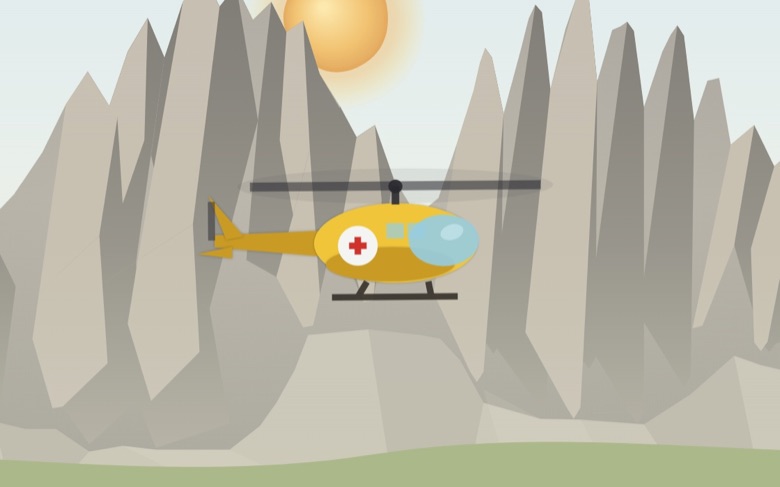
ElisoccorsoAir ambulanceGiallo e più grosso: l’ambulanza del cielo, e va di fretta.Yellow and bigger: the ambulance of the sky, and it is in a hurry.
L’elicottero bianco da turismo sopra le Odle
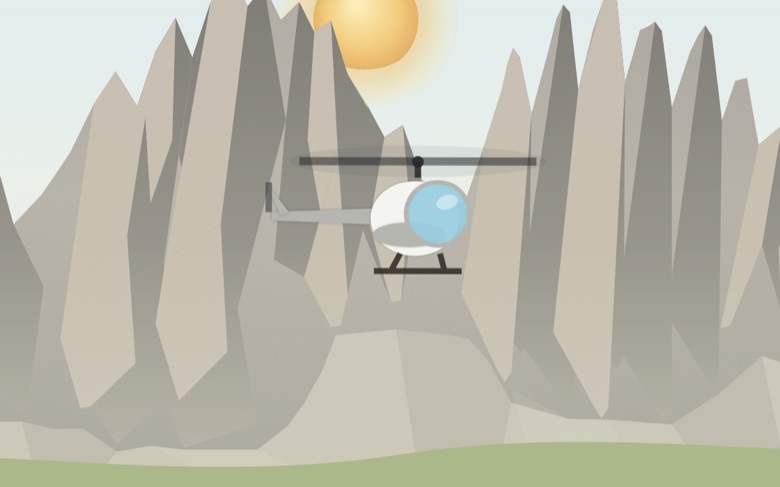
Volo panoramicoScenic flightBianco, tutto vetro davanti. Nessuna emergenza: porta a spasso qualcuno, e non è mai lo stesso.White, all glass up front. No emergency here: it is taking someone for a ride, and never the same someone.

ElicotteriHelicopters02

Prima lo senti, poi lo vedi arrivare da dietro le cime. Tre macchine si alternano sulle Odle e non vengono tutte per lo stesso motivo: due hanno un lavoro da fare, una porta soltanto a spasso qualcuno. Quale sia quale, e cosa stia succedendo lassù, lo scopri solo avvicinandoti alla cabina.

You hear it first, then you see it come round the peaks. Three machines take turns over the Odle, and they are not all here for the same reason: two have a job to do, one is simply taking someone for a ride. Which is which, and what is going on up there, you only learn by moving closer to the cabin.

Un parapendio con la vela blu sopra le Odle

ParapendiiParagliders03

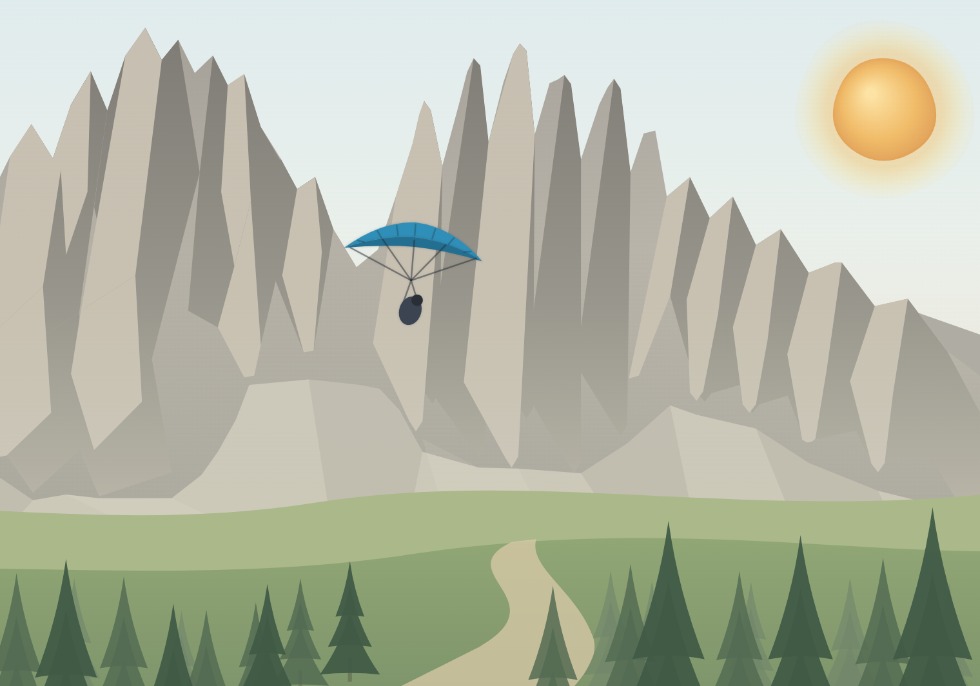
Quando il cielo torna sgombro, una vela compare dal nulla sopra le Odle. Nessuna fretta: dondola per aria finché regge, poi cerca un posto dove posarsi. Sotto c’è sempre qualcuno, e non è mai lo stesso: sfiora la vela per sapere chi è oggi.

When the sky clears, a canopy appears out of nowhere above the Odle. No hurry: it swings up there as long as the air allows, then looks for somewhere to land. There is always someone underneath, and never the same one: brush the canopy to find out who it is today.

06 · ANIMALI

Al pascolo e al margine del bosco

Grazing and at the forest edge

Nessuno li comanda: vanno e vengono per conto loro, e non tutti alle stesse ore. Qualcuno si vede soltanto di notte.

Nobody is directing them: they come and go as they please, and not all at the same hours. One of them shows only at night.

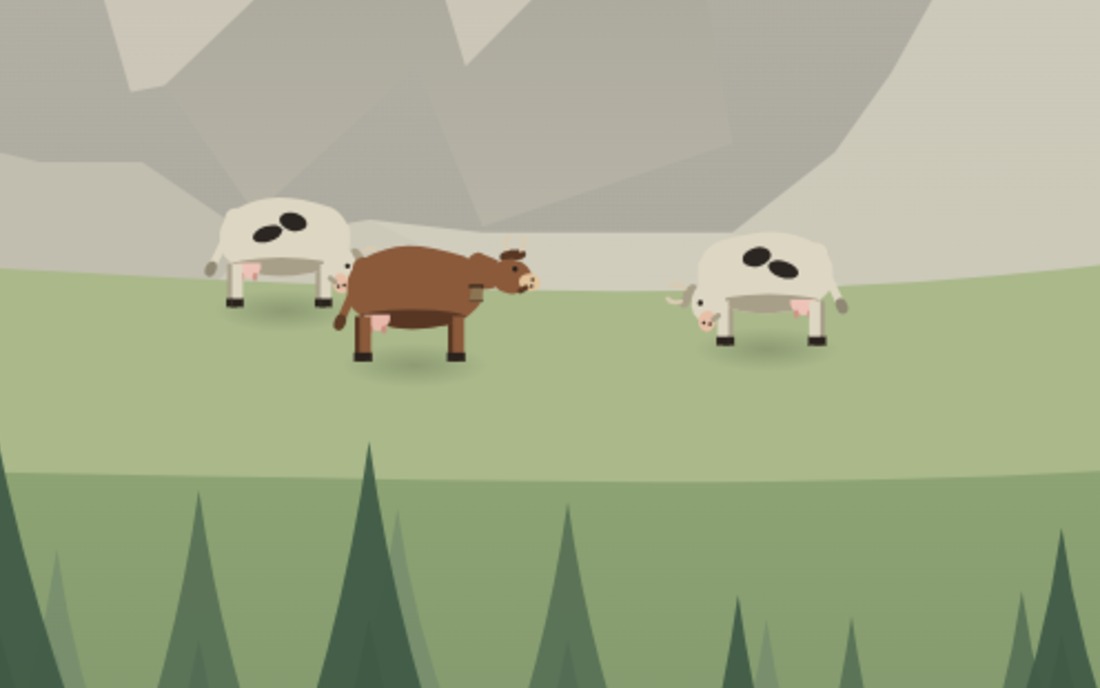
Tre mucche, una bruna e due bianche, al pascolo nel prato accanto alla malga

MuccheCows01

Nel prato accanto alla malga, con calma e senza orari precisi, qualcuna bruca. Ognuna fa di testa sua: due passi, un po’ d’erba, e ogni tanto la decisione di sdraiarsi. Hanno tutte un nome: sfiorale una a una e scoprili tutti.

In the meadow beside the hut, unhurried and on no fixed schedule, a few of them are grazing. Each one has her own idea: a couple of steps, some grass, and every so often the decision to lie down. They all have a name: brush them one by one and find them all.

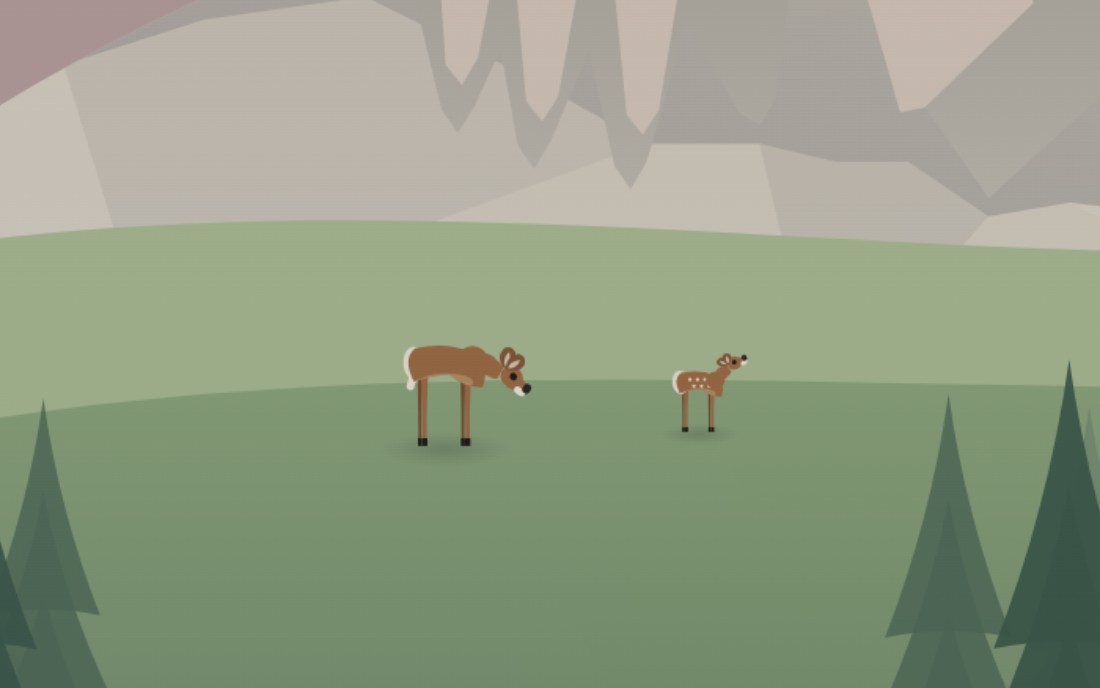
Una capriola e il suo cerbiatto al margine del bosco, sul filo d’erba davanti agli abeti

CaprioliRoe deer02

Sono timidi e scelgono le ore incerte, quando la luce non è ancora giorno o non lo è più. Escono dal bosco in due, madre e piccolo, per il filo d’erba davanti agli abeti; ma stanno all’erta, e uno dei due non abbassa mai la testa a lungo. Guardali senza insistere: se ti fai avanti troppo, spariscono tra gli alberi e la sera è finita lì. Finché restano, sfiorali per sapere come si chiamano oggi.

They are shy, and they pick the uncertain hours, when the light is not quite day any more, or not yet. Two of them slip out of the trees, mother and young, for the thread of grass in front of the firs; but they stay alert, and one of them never keeps her head down for long. Watch without pushing: press too close and they vanish among the trunks, and that is the end of the evening. While they last, brush them to learn what they are called today.
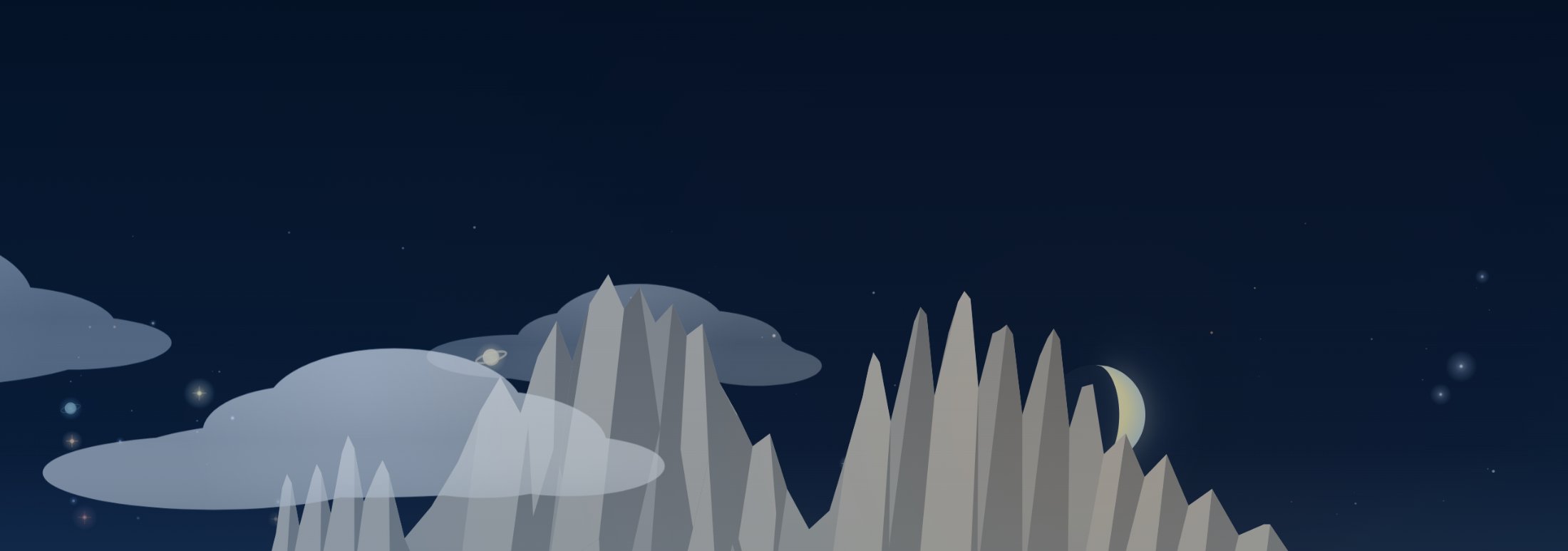
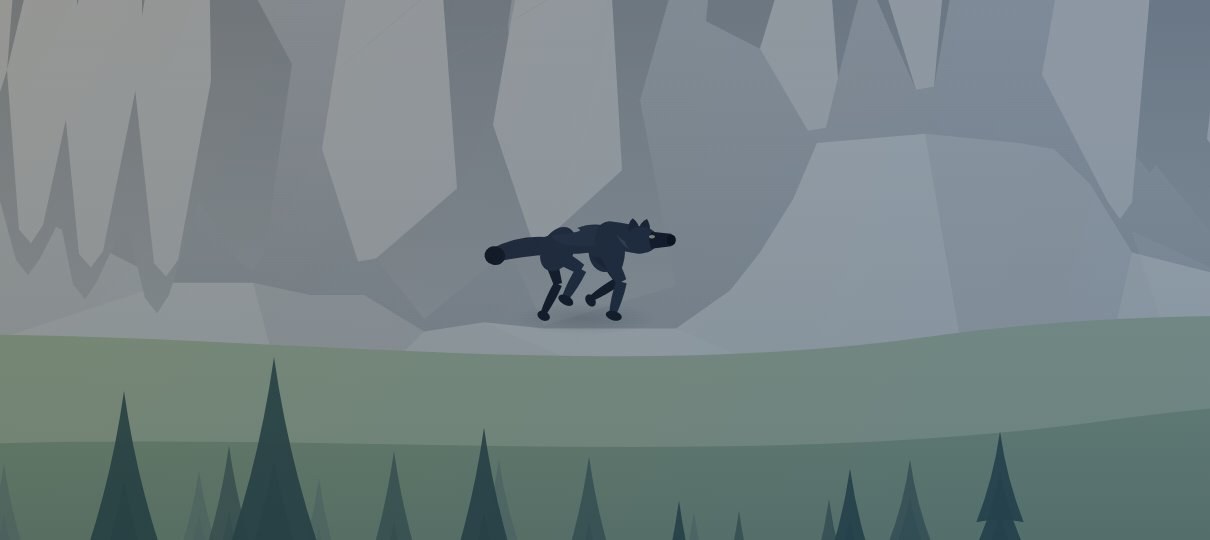
Un lupo al trotto sulla piega alta del prato sotto le Odle, di notte

LupoWolf03

Non tutte le notti, e mai due volte nella stessa. Quando c’è la luna, capita di vedere una sagoma scura attraversare al trotto la piega alta del prato sotto le Odle, senza fermarsi mai; altre volte esce più in basso, al margine del bosco dove brucano i caprioli, e sono loro ad accorgersene per primi. In Val di Funes il lupo è tornato davvero: qui passa soltanto, e non prende mai niente. Non ha un nome e non apre nessuna scheda; se ti avvicini troppo allunga il passo e sparisce prima.

Not every night, and never twice in the same one. When the moon is up, a dark shape sometimes crosses the high fold of meadow below the Odle at a steady trot, never stopping; other times it comes out lower down, at the forest edge where the roe deer browse, and they are the first to notice. The wolf really has come back to Val di Funes: here it only passes through, and it never catches anything. It has no name and opens no card; crowd it and it lengthens its stride and is gone sooner.